
Clinically Reviewed By: Dr. Brian Wind, PhD
The phrase “gas station opioid” keeps appearing in news coverage, applied to both kratom and 7-OH. They’re not the same thing, but both are dangerous. Kratom is a Southeast Asian leaf with a long traditional history and more than two dozen active alkaloids. 7-OH, short for 7-hydroxymitragynine, is one of those alkaloids, now being concentrated and sold in tablets, shots, and gummies that often contain far more of the active substance than anything in nature. The Food and Drug Administration has described concentrated 7-OH as a novel potent opioid and recommended Schedule I classification. Both can produce real dependence. Both can produce withdrawal that benefits from medical evaluation.
Key Takeaways
- Kratom and 7-OH are not the same. Kratom is a plant with many active alkaloids. 7-OH is one of them, now concentrated in products that act more like opioids than the leaf does.
- The FDA recommended in July 2025 that the Drug Enforcement Administration classify concentrated 7-OH as a Schedule I controlled substance, and federal agents seized about $1 million worth of 7-OH products in December 2025.
- Both whole-leaf kratom and concentrated 7-OH can cause physical dependence, with withdrawal that resembles opioid withdrawal.
- Safe stopping depends on what you’ve been using, how long, and what else is in your system. A medical evaluation is the lower-risk starting point.
What “Gas Station Opioid” Actually Means
The term took hold in mainstream coverage during 2025, when journalists looking at the rise of concentrated 7-OH products needed a shorthand. These compounds are sold legally in places that don’t sell prescription medications: gas stations, smoke shops, vape stores, and convenience markets. They’re marketed as supplements or extracts. They produce opioid-like effects. “Gas station opioid” captures that picture in three words.
The trouble with the shorthand is that it collapses two related but distinct things into one. Kratom and 7-OH share a chemical lineage, and the products often sit next to each other on the same shelf, but the pharmacology is different enough that they shouldn’t be discussed interchangeably. Understanding the distinction is what helps you (or a family member you’re worried about) figure out what you’re actually dealing with.
Brandon Clarke’s Death: Where the Investigation Stands
Memphis Grizzlies forward Brandon Clarke was found dead at a home in the San Fernando Valley on Monday, May 11, 2026, at age 29. His agency, Priority Sports, confirmed the news the following day. Per NBC Los Angeles, drug paraphernalia was found at the residence and the incident is being investigated as a possible overdose. An autopsy has been performed, and the Los Angeles County Medical Examiner’s Office has not yet released a cause of death. That determination typically takes weeks to months while toxicology is completed.
Public attention has focused on kratom because of Clarke’s earlier arrest. In April 2026, he was arrested in Arkansas (where kratom is illegal) on charges that included speeding and possession of a controlled substance reportedly identified as kratom, with more than 200 grams found in his vehicle.
None of that establishes a cause of death. Whether any substance played a role will be addressed in the medical examiner’s report. A single high-profile case doesn’t prove a pattern of risk, and the FDA’s July 2025 actions on concentrated 7-OH preceded Clarke’s death by months. Those actions rested on receptor pharmacology and adverse-event reports drawn from many cases over time.
Kratom 101: The Plant and Its Active Compounds
What Mitragyna Speciosa Actually Is
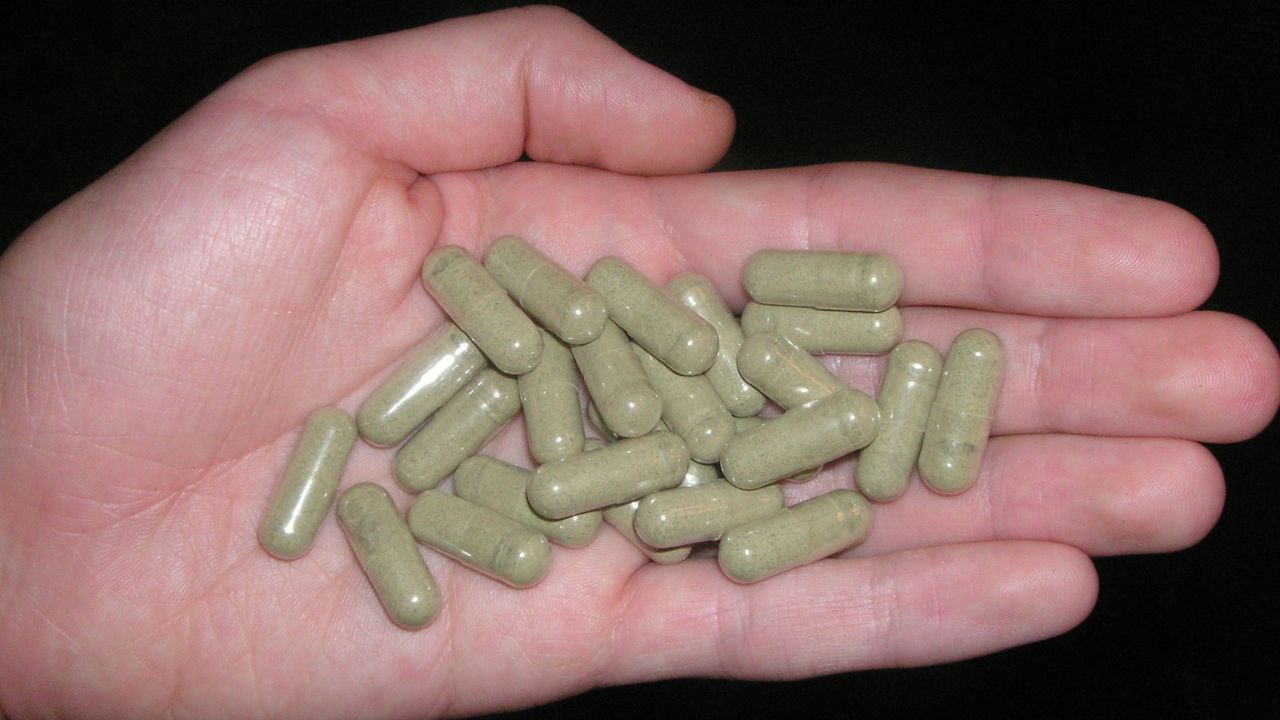
Kratom is the common name for Mitragyna speciosa, a tropical evergreen tree native to Thailand, Indonesia, Malaysia, Myanmar, and Papua New Guinea. Workers in those regions have chewed the leaves for centuries to push through long days, manage pain, and ease discomfort during opioid withdrawal. The leaf contains more than two dozen active alkaloids. The two most relevant here are mitragynine, which makes up the bulk of the active content, and 7-hydroxymitragynine, which appears in trace amounts in the natural leaf.
How Kratom Interacts With the Opioid System
Mitragynine and 7-OH both act at the brain’s mu-opioid receptors, the same family of receptors targeted by morphine, oxycodone, and fentanyl. They activate those receptors partially, which is why kratom doesn’t feel like a strong opioid at typical doses and why the National Institute on Drug Abuse describes kratom’s effects as ranging from stimulant-like at low doses to sedating at higher ones. Partial activation still produces real effects. The receptor binding is real, the dependence is real, and the discontinuation syndrome that follows regular use looks more like opioid withdrawal than caffeine withdrawal.
The Regulatory Patchwork
Kratom isn’t federally scheduled in the United States. The DEA proposed emergency Schedule I classification in August 2016 and withdrew the proposal that October following public comment. Since then, legal status has been decided state by state. As of mid-2026, seven states ban kratom outright: Alabama, Arkansas, Connecticut, Indiana, Louisiana, Vermont, and Wisconsin. Connecticut became the most recent addition in March 2026, classifying kratom as a Schedule I controlled substance under Public Act 25-101. Kansas signed a ban in April 2026 that takes effect July 1, 2026, and Tennessee enacted a similar measure in May 2026, also effective July 1, 2026.
Florida and Kentucky operate under the Kratom Consumer Protection Act, which regulates labeling, age limits, and alkaloid content rather than imposing a ban. They regulate whole-leaf kratom under consumer-protection laws rather than banning it outright, though both states have taken separate action against concentrated or isolated 7-OH products
What 7-OH Is and Why It’s Different
7-Hydroxymitragynine vs. Whole-Leaf Kratom
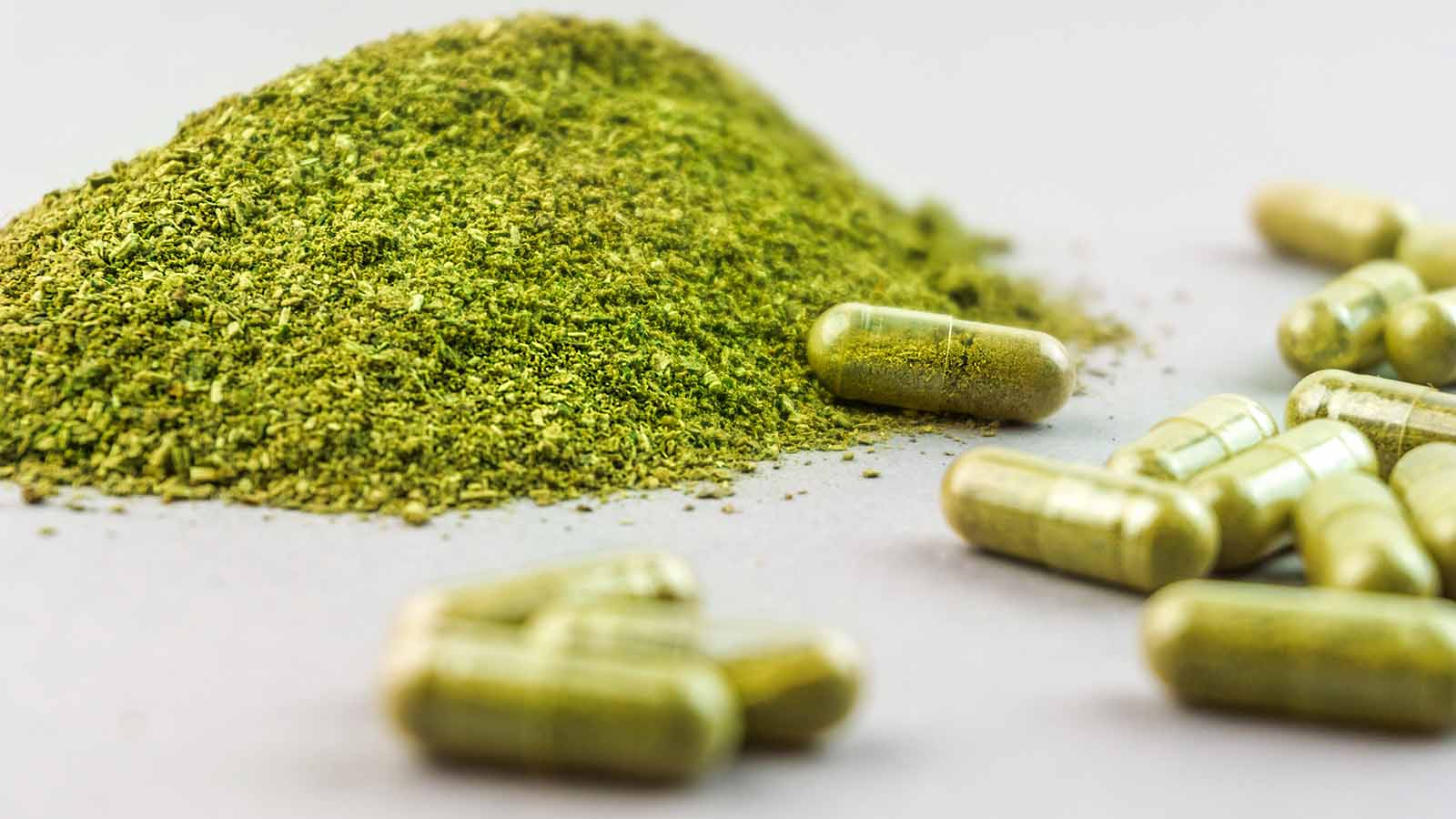
In fresh kratom leaf, 7-hydroxymitragynine is a minor alkaloid. Concentrations are typically well under 1% of the total alkaloid content. The newer products in question are tablets, shots, gummies, and “extracts” engineered to contain far higher concentrations of 7-OH, sometimes approaching 98% of the active alkaloid content. The compound has been isolated from the leaf or synthesized in a lab and then formulated for direct delivery. The labels often still say “kratom,” which is part of why the situation has gotten confusing on store shelves.
Why Concentrated 7-OH Products Raise Different Risks
At the receptor, 7-OH binds with far more affinity than mitragynine does. Research cited in the FDA’s scientific assessment of 7-OH reports binding at mu-opioid receptors at roughly 10 to 13 times the rate of morphine, with respiratory depression measured at multiple times morphine’s potency in animal studies. That receptor profile is why the FDA classifies concentrated 7-OH products as opioids rather than supplements, and why dependence on these products tends to develop faster and run more severely than dependence on whole-leaf kratom. Product variability is its own risk: two tablets with identical packaging can deliver very different doses, because no federal standard governs what’s in them.
The FDA’s Position on 7-OH
On July 15, 2025, the FDA issued warning letters to seven companies marketing 7-OH tablets, gummies, drink mixes, and shots as dietary supplements or foods. The agency stated that marketing 7-OH this way is unlawful. Two weeks later, on July 29, 2025, the FDA formally recommended that the DEA classify concentrated 7-OH as a Schedule I controlled substance under the Controlled Substances Act. The FDA can recommend scheduling but cannot impose it; the DEA holds the final authority and must complete its own rulemaking before any federal ban takes effect. In December 2025, the FDA, Department of Justice, and U.S. Marshals seized approximately 73,000 units of 7-OH products worth roughly $1 million from three Missouri firms that had continued distribution after receiving warning letters. As of this writing, the DEA has not finalized scheduling. The regulatory picture is still moving.
When Use Crosses Into Dependence
Recreational use and dependence sit on the same spectrum, and the boundary appears gradually, as a pattern that builds over weeks and months. With kratom and 7-OH, the pattern usually arrives before the user notices it.
If you’re trying to figure out where you (or someone you love) sit on that spectrum, answer the following yes or no:
- I use kratom or 7-OH first thing in the morning to feel normal.
- I’ve increased the dose to get the same effect.
- I use it to avoid feeling sick when I haven’t had any.
- I’ve hidden my use from a partner, parent, or kid.
- I’ve tried to stop and couldn’t, or only made it a few days.
- I feel anxious or restless when I haven’t used in 6 to 12 hours.
- I’ve kept using even after it caused a problem at work, in a relationship, or with money.
If you answered yes to three or more, what you’re describing fits the clinical definition of a substance use disorder. Recovery is possible, and the first step is a conversation. (You don’t have to commit to anything by making the call.)
Kratom and 7-OH Withdrawal: What to Expect
Timeline and Symptoms
Acute withdrawal from regular kratom or 7-OH use usually begins within 12 to 24 hours of the last dose. The symptom profile mirrors opioid withdrawal: gastrointestinal distress, runny nose, muscle aches, restless legs, anxiety, irritability, insomnia, sweating, and strong cravings. Symptoms typically peak between day 2 and day 4 and improve significantly within a week. Sleep disruption, low mood, and cravings can linger for several weeks after the acute phase resolves. Concentrated 7-OH withdrawal tends to present more intensely than whole-leaf kratom withdrawal, on a faster timeline.
Why Medical Detox Matters for Some People
Not everyone needs supervised medical detox to stop. With clinical guidance, outpatient management can work for milder use patterns. The clinical question is whether your situation has features that make outpatient management risky: heavy daily use of concentrated 7-OH, mixing with alcohol or benzodiazepines, prior failed taper attempts, co-occurring mental health conditions, or a medical history that complicates the autonomic symptoms of withdrawal. In those cases, a supervised setting manages symptoms safely, addresses underlying conditions in parallel, and avoids the “got sick, used to feel better, restarted the cycle” pattern that drives many home-taper relapses.

How JourneyPure Treats Kratom and 7-OH Dependence
JourneyPure’s approach to opioid-receptor substances starts with medical evaluation. Detox is supervised by physicians and nurses, with medication available to ease withdrawal symptoms and around-the-clock monitoring through the hardest days. Residential treatment then addresses the why behind the use, with evidence-based therapies (cognitive behavioral therapy, dialectical behavior therapy, trauma-focused work) alongside experiential ones (equine therapy, outdoor programming, holistic care). For someone whose kratom or 7-OH use is bound up with anxiety, chronic pain, depression, or trauma, the dual diagnosis approach matters: treating one condition without the other tends to fail.
The post-treatment piece is where the program stays distinctive. JourneyPure Coaching connects every alumnus with a coach (often a person in recovery themselves) and an app that has maintained engagement at 89% a year after discharge. Network-wide, 84% of people who complete a JourneyPure program report sustained sobriety, compared with the 40 to 60% relapse range cited by the National Institute on Drug Abuse for substance use disorders generally. That’s aggregate data across the network. Individual outcomes depend on the person and the program. (Recovery rarely runs in a straight line, and the right program is the one that fits the person in front of it.)
Getting help is as easy as picking up the phone. JourneyPure operates residential facilities in Tennessee, Kentucky, and Florida, with outpatient clinics across the southeast. To talk through what care might look like for you or someone you love, call (888) 985-2207.
Frequently Asked Questions
Is 7-OH the Same as Kratom?
No. Kratom is the leaf of a tropical tree, Mitragyna speciosa, containing more than two dozen active alkaloids. 7-OH, or 7-hydroxymitragynine, is one of those alkaloids, present in fresh leaf at trace levels. Products sold as concentrated 7-OH can contain up to 98% 7-OH, putting them in a different pharmacological category than the leaf itself.
Is 7-OH Legal in the United States?
Federal status is in motion. In July 2025, the FDA recommended that the DEA schedule concentrated 7-OH as a Schedule I controlled substance, and the DEA has not yet finalized that classification. Several states, including Connecticut and Tennessee, have moved to restrict or ban kratom and 7-OH at the state level. Where you live changes the legal answer.
Can You Get Addicted to Kratom?
Yes. Kratom’s active alkaloids partially activate the same brain receptors that opioids target, and regular use can produce physical dependence and a substance use disorder pattern. Not everyone who uses kratom develops dependence, and the products carry real risk.
How Long Does Kratom Withdrawal Last?
Acute withdrawal usually starts within 12 to 24 hours of the last dose, peaks at day 2 to 4, and improves significantly within a week. Some symptoms (sleep disruption, low mood, cravings) can linger for several weeks. Severity depends on your dose history and whether other substances are in the picture.
Do I Need Medical Detox for Kratom or 7-OH?
Not always. The decision turns on how heavily you’ve been using, what else is in your system, and your medical and psychiatric history. If you’ve been using concentrated 7-OH daily, or if kratom is mixed with alcohol, benzodiazepines, or other substances, medical evaluation is the lower-risk starting point. A clinician can tell you whether outpatient management is reasonable or whether monitored detox makes more sense.
What’s the Difference Between Kratom and Prescription Opioids Like Oxycodone or Fentanyl?
Kratom’s alkaloids partially activate the same mu-opioid receptors that prescription opioids fully activate. Whole-leaf kratom’s effect at those receptors is more limited than the effect of oxycodone or fentanyl. Concentrated 7-OH sits much closer in receptor activity to a strong opioid, which is why the FDA characterizes it that way.
What Should I Do If a Family Member Is Using 7-OH Products?
Start with the label. If it says “7-OH,” “7-hydroxy,” “kratom extract” with high alkaloid percentages, or it’s a shot, tablet, or gummy from a gas station or smoke shop, you’re looking at the concentrated category. Have a conversation that isn’t framed as a moral judgment. Ask what they think is in it, when they started, and whether they’ve tried to stop. Then call a treatment provider, even if it’s just to ask questions.
Crisis and Emergency Resources
If you or someone you know is in a substance use or mental health crisis, help is available now. Contact the SAMHSA National Helpline at 1-800-662-HELP (4357) for free, confidential treatment referrals 24/7. Reach the 988 Suicide and Crisis Lifeline by calling or texting 988. The Crisis Text Line is available by texting HOME to 741741. For emergencies, call 911.
Learn More
The FDA’s central resource on 7-OH is its Hiding in Plain Sight: 7-OH Products page, with linked enforcement updates and the agency’s scientific assessment. The National Institute on Drug Abuse overview of kratom covers pharmacology, effects, and research gaps.
Taking the Next Step
If you’re struggling with addiction, the most important decision you can make is to seek help. At JourneyPure at the River, we understand that reaching out for help takes courage. Our admissions specialists are available 24/7 to answer your questions, verify your insurance, and help you determine if our program is the right fit for your needs. We accept patients from across Tennessee and neighboring states, as well as from around the country.
Don’t let location stop you from getting the help you deserve. Call JourneyPure at the River today at 629-222-9449 to speak with our compassionate admissions team.
Whether you’re in Nashville, Memphis, Chattanooga, Knoxville, or anywhere else, we’re here to help you start your recovery journey. The distance you travel for treatment is far less important than the commitment you make to change your life. Your recovery is worth the journey.
JourneyPure at the River is a leading addiction treatment center in Murfreesboro, Tennessee, offering comprehensive care for substance use disorders and co-occurring mental health conditions. Our evidence-based programs, compassionate staff, and innovative continuing care model have helped thousands of people achieve lasting recovery. Contact us today to learn how we can help you or your loved one.
